“He Carried Hungary in His Heart to America”: Balázs Somogyi’s Memoir Presented in Budapest
 Gallery
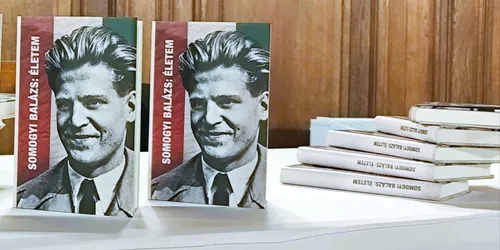
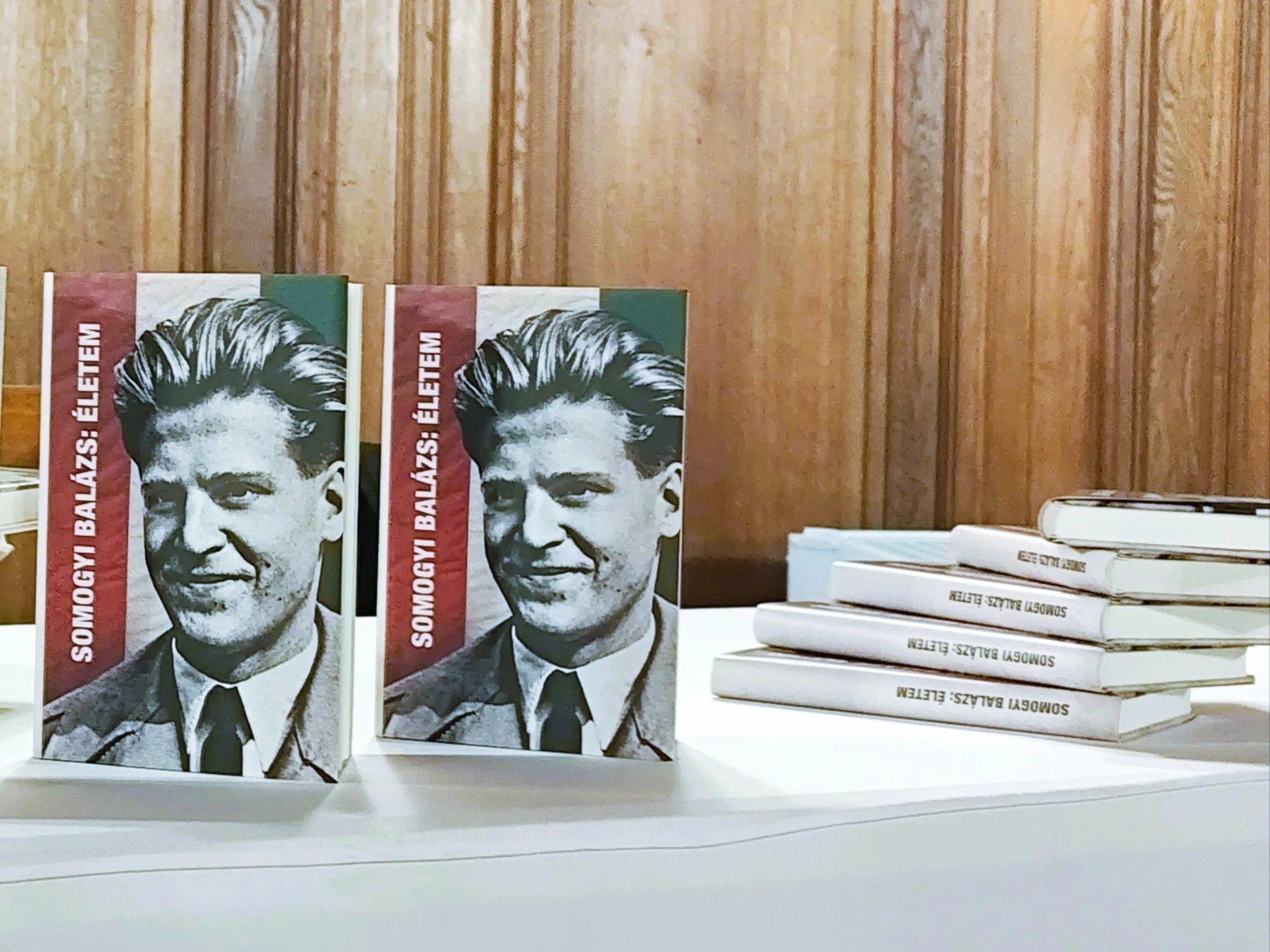
Following its presentations at three venues in the United States, Balázs Somogyi’s memoir, Életem (My Life), was also presented in Budapest on November 9. Through the story of Balázs Somogyi’s life, the book revisits defining events in twentieth-century Hungarian history, from the years following World War II and the 1956 Revolution, to emigration and the development of Hungarian-American community life.
Revolution, emigration, starting over, and an unwavering commitment to preserving Hungarian identity: Balázs Somogyi’s life tells a remarkable story. A first-year medical student during the 1956 Revolution, he stood up for the cause of freedom before leaving Hungary with his younger brother just a few months later. He settled in the United States, where he built a new life as a surgeon and an active member of the Hungarian community. In 2016, his contributions were recognized with the Middle Cross of the Hungarian Order of Merit.
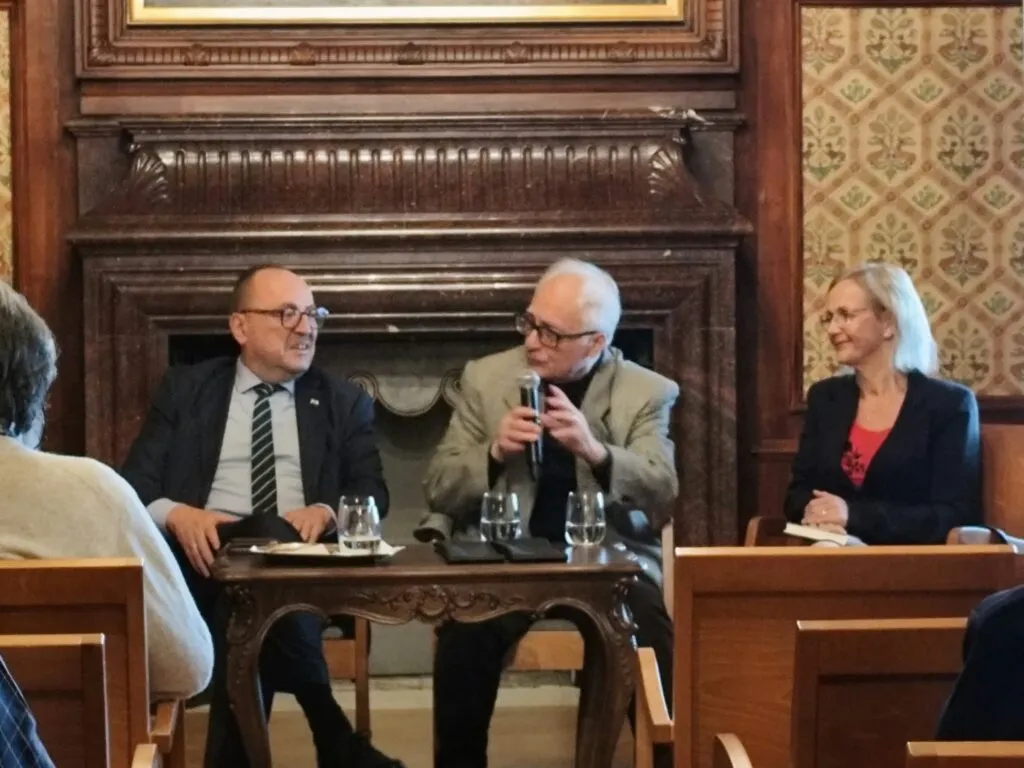
The event, organized by the Friends of Hungary Foundation, was held at the Károlyi–Csekonics Palace, home to the Faculty of Humanities and Social Sciences of Károli Gáspár University of the Reformed Church. Although the author was unable to attend, friends and the book’s editor reflected on key moments in his life.
Zsolt Németh, a member of Parliament and a longtime friend, spoke about Somogyi as a man “whose positivity and love of life radiate from him.” He noted that
Balázs never sought positions or titles, yet responsibilities always seemed to find him.
People could count on him for all kinds of community activities, from organizing events and cooking goulash, to putting together balls and dances. Somogyi believed that no community should be allowed to disappear and that even the smallest initiatives were worth preserving. Passing on Hungarian identity to future generations was especially important to him.
András Ludányi, a Hungarian-American sociologist and board member of the Friends of Hungary Foundation, also recalled Somogyi’s role in building Hungarian communities in the United States. The two met as young émigrés in New York’s Hungarian neighborhood.
Somogyi was instrumental in organizing the Hungária Dance Group and later played a significant role in the work of the Hungarian Communion of Friends.
According to Ludányi, a shared language helped bring émigrés together, but emotional bonds and family ties were what truly sustained their sense of belonging.
The book’s editor, Ildikó Antal-Ferencz, spoke about how the volume came together. During their interviews, she made a conscious effort to explore the motivations behind Somogyi’s community involvement, an aspect he had often modestly downplayed in his own recollections. Their conversations explored the family’s experiences in the years following World War II, the events of the 1956 Revolution, the difficult decision to leave Hungary, and the challenges of building a new life in another country.
One particularly compelling theme was how preserving his Hungarian identity became a personal mission for Somogyi. As the book’s editor recalled:
“He carried Hungary and his Hungarian identity in his heart to America.”
The book has already been presented at three venues in the United States: in New York, in Wallingford, Connecticut, and at Lake Hope, Ohio, during the Hungarian Communion of Friends’ 50th ITT-OTT gathering.
via Hungary Today